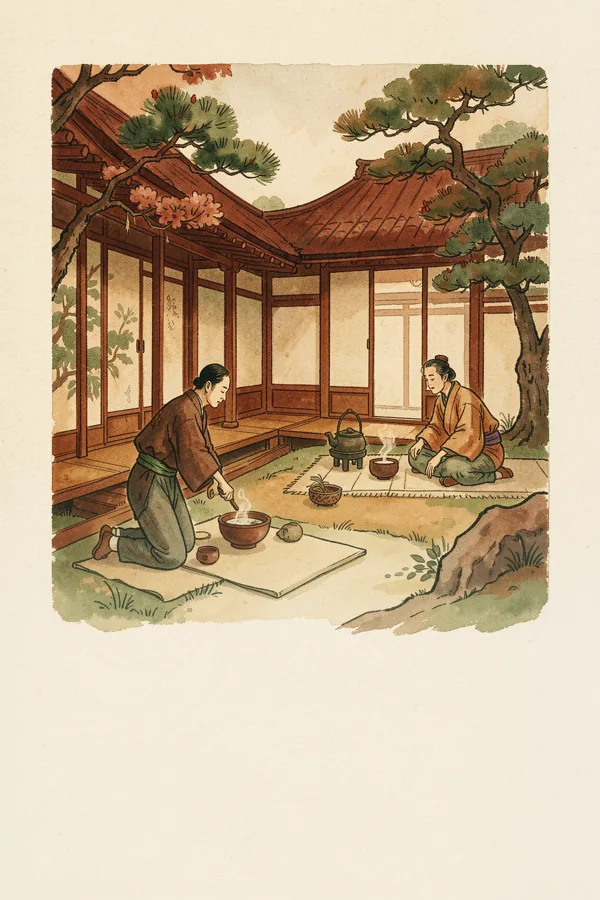
Essays by Kakuzo Okakura on the philosophy and aesthetics of tea, which he calls Teaism. The work explores how tea culture shaped Japanese art, architecture, and daily life, emphasizing simplicity, harmony, and the beauty of imperfection. It offers a thoughtful introduction to Eastern thought and aesthetics.
For teachers and schools: paste the code into your site or blog.
Cover illustration generated by AI.
Text source: gutenberg.org · The work is in the public domain.
Opening of the book
THE BOOK OF TEA By Kakuzo Okakura Contents I. The Cup of Humanity Tea began as a medicine and grew into a beverage. In China, in the eighth century, it entered the realm of poetry as one of the polite amusements. The fifteenth century saw Japan ennoble it into a religion of aestheticism—Teaism. Teaism is a cult founded on the adoration of the beautiful among the sordid facts of everyday existence. It inculcates purity and harmony, the mystery of mutual charity, the romanticism of the social order. It is essentially a worship of the Imperfect, as it is a tender attempt to accomplish something possible in this impossible thing we know as life. The Philosophy of Tea is not mere aestheticism in the
 Readnara