Opening of the book
Introduction
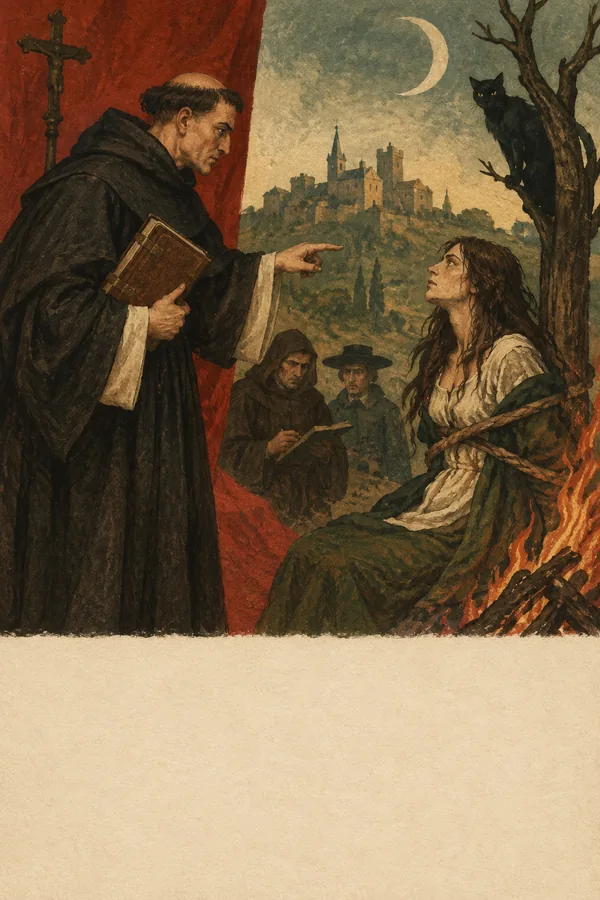
It has been recognized even from the very earliest times, during the first gropings towards the essential conveniences of social decency and social order, that witchcraft is an evil thing, an enemy to light, an ally of the powers of darkness, disruption, and decay. Sometimes, no doubt, primitive communities were obliged to tolerate the witch and her works owing to fear; in other words, witchcraft was a kind of blackmail; but directly Cities were able to to coordinate, and it became possible for Society to protect itself, precautions were taken and safeguards were instituted against this curse, this bane whose object seemed to blight all that was fair, all that was just and good, and that was well-appointed and honourable, in a word, whose aim proved to be set up on high the red standard of revolution; to overwhelm religion, existing order, and the comeliness of life in an abyss of anarchy, nihilism, and despair. In his great treatise De Ciutate Dei S. Augustine set forth the theory, or rather the living fact, of the two Cities, the City of God, and the opposing stronghold of all that is not for God, that is to say, of all that is against
Him.
This seems to be a natural truth which the inspired Doctor has so eloquently demonstrated in his mighty pages, and even before the era of Christianity men recognized the verity, and nations who had never heard the Divine command put into practice the obligation of the Mosaic maxim: Thou shalt not suffer a witch to live. (Vulgate:
Maleficos non patieris uiuere. Douay: Wizards thou shalt not suffer to live. Exodus 22:18.)
It is true that both in the Greek and in the earlier Roman cults, worships often directly derived from secret and sombre sources, ancient gods, or rather demons, had their awful superstitions and their horrid rites, powers whom men dreaded but out of very terror placated; fanes men loathed but within whose shadowed portals they bent and bowed the knee perforce in trembling fear. Such deities
Keep listening free
 Readnara