Modern Cookery for Private Families is a classic 19th-century English cookbook by Eliza Acton, first published in 1845. It offers practical recipes and advice on household cooking, emphasising economy, nutrition and the reduction of waste. It is worth listening to for its glimpse into Victorian domestic life and early food writing.
For teachers and schools: paste the code into your site or blog.
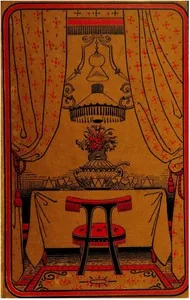
Cover of the original edition (Project Gutenberg, public domain).
Text source: gutenberg.org · The work is in the public domain.
Opening of the book
MODERN COOKERY FOR PRIVATE FAMILIES BY ELIZA ACTON NEW EDITION LONDON
LONGMANS, GREEN, READER, AND DYER 1882.
PREFACE.
It cannot be denied that an improved system of practical domestic cookery, and a better knowledge of its first principles, are still much needed in this country; where, from ignorance, or from mismanagement in their preparation, the daily waste of excellent provisions almost exceeds belief. This waste is in itself a very serious evil where so large a portion of the community often procure—as they do in England—with painful difficulty, and with the heaviest labour, even sufficient bread to sustain existence; but the amount of positive disease which is caused amongst us by improper food, or by food rendered unwholesome by a bad mode of cooking it, seems a greater evil still. The influence of diet upon health is indeed a subject of far deeper importance than it would usually appear to be considered, if we may judge by the profound indifference with which it is commonly treated. It has occupied, it is true, the earnest attention of many eminent men of science, several of whom have recently investigated it with the most patient and laborious research, the results of which they have made known to the world in their writings, accompanied, in some instances, by information of the highest value as to the most profitable and nutritious modes of preparing various kinds of viands.
In arranging the present enlarged edition of this volume for publication, I have gladly taken advantage of such of their instructions (those of Baron Liebig especially) as have seemed to me adapted to its character, and likely to increase its real utility. These, I feel assured, if carefully followed out, will much assist our progress in culinary art, and diminish the unnecessary degree of expenditure which has hitherto attended its operations; for it may safely be
 Readnara