Seneca’s Minor Dialogues, together with the Dialogue on Clemency, is a collection of Stoic essays in dialogue form. They discuss virtue, fate, anger, grief, peace of mind and mercy in a ruler. It is worth listening to as a clear introduction to Roman Stoic ethics and practical philosophy.
For teachers and schools: paste the code into your site or blog.
Cover illustration generated by AI.
Text source: gutenberg.org · The work is in the public domain.
Opening of the book
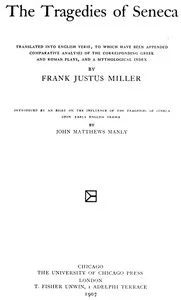
L. ANNAEUS SENECA MINOR DIALOGUES TOGETHER WITH THE DIALOGUE ON CLEMENCY TRANSLATED BY AUBREY STEWART, M.A. LATE FELLOW OF TRINITY COLLEGE, CAMBRIDGE LONDON — GEORGE BELL AND SONS, YORK STREET COVENT GARDEN 1889 CHISWICK PRESS :—C. WHITTINGHAM AND CO., TOOKS COURT, CHANCERY LANE PREFACE.
I can say little by way of preface to Seneca’s “Minor Dialogues” which
I have not already expressed in my preface to “De Beneficiis,” except that the “Minor Dialogues” seem to me to be composed in a gloomier key than either the “De Beneficiis” or “De Clementia,” and probably were written at a time when the author had already begun to experience the ingratitude of his imperial pupil. Some of the
Dialogues are dated from Corsica, Seneca’s place of exile, which he seems to have found peculiarly uncomfortable, although he remarks that there are people who live there from choice. Nevertheless, mournful as they are in tone, these Dialogues have a certain value, because they teach us what was meant by Stoic philosophy in the time of the Twelve Caesars. I have only to add that the value of my work has been materially enhanced by the kindness of the Rev. Professor J.
E. B. Mayor, who has been good enough to read and correct almost all the proof sheets of this volume.
 Readnara