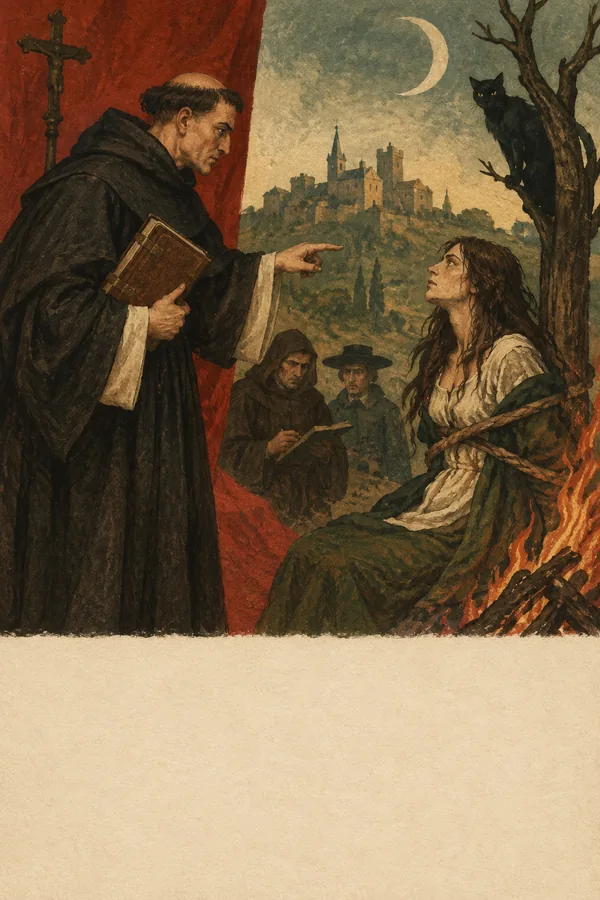
This collection of essays brings together French, German and Italian writers, among them Montaigne, Kant, Schiller, Lessing, Renan and Mazzini. They consider happiness, death, education, friendship, books, aesthetics and moral philosophy. It offers a varied introduction to European literary and philosophical thought.
For teachers and schools: paste the code into your site or blog.
Cover illustration generated by AI.
Text source: gutenberg.org · The work is in the public domain.
Opening of the book
David Turner, Charles Franks and the Online Distributed Proofreading Team. LITERARY AND PHILOSOPHICAL ESSAYS HARVARD CLASSICS V32 CONTENTS THAT WE SHOULD NOT JUDGE OF OUR HAPPINESS UNTIL AFTER OUR DEATH THAT TO PHILOSOPHISE IS TO LEARNE How TO DIE OF THE INSTITUTION AND EDUCATION OF CHILDREN OF FRIENDSHIP OF BOOKES BY MONTAIGNE MONTAIGNE
WHAT IS A CLASSIC? BY CHASLES-AUGUSTIN SAINTE-BEUVE
THE POETRY OF THE CELTIC RACES BY ERNEST RENAN
THE EDUCATION OF THE HUMAN RACE BY GOTTHOLD EPHRAIM LESSING
LETTERS UPON THE AESTHETIC EDUCATION OF MAN BY J. C. FRIEDRICH
VON SCHILLER
FUNDAMENTAL PRINCIPLES OF THE METAPHYSIC OF MORALS
TRANSITION FROM POPULAR MORAL PHILOSOPHY TO THE METAPHYSIC OF
MORALS
IMMANUEL KANT
BYRON AND GOETHE BY GIUSEPPE MAZZINI
INTRODUCTORY NOTE
Michel Eyquem De Montaigne, the founder of the modern Essay, was born February 28, 1533, at the chateau of Montaigne in Pirigord. He came of a family of wealthy merchants of Bordeaux, and was educated at the College de Guyenne, where he had among his teachers the great
Scottish Latinist, George Buchanan. Later he studied law, and held various public offices; but at the age of thirty-eight he retired to his estates, where he lived apart from the civil wars of the time, and devoted himself to study and thought. While he was traveling in
Germany and Italy, in 1580-81, he was elected mayor of Bordeaux, and this office he filled for four years. He married in 1565, and had six daughters, only one of whom grew up. The first two books of his
"Essays" appeared in 1580; the third in 1588; and four years later he died.
These are the main external facts of Montaigne's life: of the man himself the portrait is to be found in his book. "It is myself I portray,"
 Readnara