Kant's Prolegomena to Any Future Metaphysics is a collection of philosophical essays and a concise introduction to his critical philosophy. It asks how metaphysics is possible as a science and examines the limits of human knowledge, space, time, and the categories. It is worth listening to as a clear guide to Kant's central ideas.
For teachers and schools: paste the code into your site or blog.
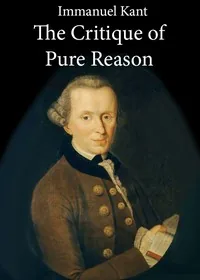
Cover illustration generated by AI.
Text source: gutenberg.org · The work is in the public domain.
Opening of the book
KANT'S PROLEGOMENA TO ANY FUTURE METAPHYSICS EDITED IN ENGLISH BY DR. PAUL CARUS THIRD EDITION CHICAGO THE OPEN COURT PUBLISHING COMPANY 1912 TRANSLATION COPYRIGHTED BY The Open Court Publishing Co.
1902.
[Transcriber's note: ** Supplemental material and table of contents are omitted from this etext.
**]
Contents
PUBLISHERS' PREFACE.
INTRODUCTION.
PROLEGOMENA.
PREAMBLE ON THE PECULIARITIES OF ALL METAPHYSICAL
COGNITION.
FIRST PART OF THE TRANSCENDENTAL PROBLEM.
HOW IS PURE MATHEMATICS POSSIBLE?
SECOND PART OF THE TRANSCENDENTAL PROBLEM.
HOW IS THE SCIENCE OF NATURE POSSIBLE?
THIRD PART OF THE MAIN TRANSCENDENTAL PROBLEM.
HOW IS METAPHYSICS IN GENERAL POSSIBLE?
SCHOLIA.
SOLUTION OF THE GENERAL QUESTION OF THE
PROLEGOMENA, "HOW IS METAPHYSICS POSSIBLE AS A
SCIENCE?"
APPENDIX.
ON WHAT CAN BE DONE TO MAKE METAPHYSICS ACTUAL
AS A SCIENCE.
PUBLISHERS' PREFACE.
KANT'S Prolegomena,1 although a small book, is indubitably the most important of his writings. It furnishes us with a key to his main work, The Critique of Pure Reason; in fact, it is an extract containing all the salient ideas of Kant's system. It approaches the subject in the simplest and most direct way, and is therefore best adapted as an introduction into his philosophy. For this reason, The Open Court
Publishing Company has deemed it advisable to bring out a new edition of the work, keeping in view its broader use as a preliminary survey and explanation of Kant's philosophy in general. In order to make the book useful for this broader purpose, the editor has not only stated his own views concerning the problem underlying the
 Readnara