A selection of fifteen sonnets by the Italian poet Francesco Petrarca, translated by Thomas Wentworth Higginson. Drawn from his Canzoniere, they explore love, devotion, time, and memory in the sonnet form that Petrarch helped shape. Worth listening for their musical language and lasting influence on European poetry.
For teachers and schools: paste the code into your site or blog.
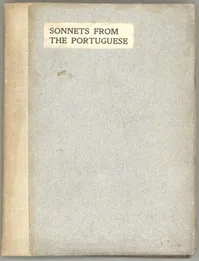
Cover of the original edition (Project Gutenberg, public domain).
Text source: gutenberg.org · The work is in the public domain.
Opening of the book
Transcriber’s Note: Printer errors in the Italian sonnets are noted in the Transcriber’s Note at the end of this file, along with a list of the corresponding sonnet numbers in Il
Canzoniere.
INTRODUCTION
SONNETS
title page
FIFTEEN
SONNETS OF
PETRARCH
SELECTED AND TRANSLATED BY
THOMAS WENTWORTH HIGGINSON
PUBLISHED BY HOUGHTON
MIFFLIN
& COMPANY BOSTON AND NEW
YORK
MDCCCCIII
COPYRIGHT 1900 AND 1903
BY THOMAS WENTWORTH HIGGINSON
ALL RIGHTS RESERVED
INTRODUCTION
NOTE
TƒƗǪ introduction is based essentially upon a paper ‘Sunshine and
Petrarch’ which originally included most of the sonnets in this volume. It was written at Newport, R.I., where the translator was then residing.
INTRODUCTION
decorative N
Nŧĵǡ my summer home there is a little cove or landing by the bay, where nothing larger than a boat can ever anchor. I sit above it now, upon the steep bank, knee-deep in buttercups, and amid grass so lush and green that it seems to ripple and flow instead of waving. Below lies a tiny beach, strewn with a few bits of driftwood and some purple shells, and so sheltered by projecting walls that its wavelets plash but lightly. A little farther out the sea breaks more roughly over submerged rocks, and the waves lift themselves, before breaking, in an indescribable way, as if each gave a glimpse through a translucent window, beyond which all ocean’s depths might be clearly seen, could one but hit the proper angle of vision. On the right side of my retreat a high wall limits the view, while close upon the left the crumbling parapet of Fort Greene stands out into the foreground, its verdant scarp so relieved against the blue water that each inward bound schooner seems to sail into a cave of grass. In the middle distance is a white lighthouse, and beyond lie the round tower of old Fort Louis, and the soft low walls of Conanicut.
Behind me an oriole chirrups in triumph amid the birch-trees which wave around the house of the haunted window; before me a
 Readnara