A collection of essays on the history of evolutionary thought. Samuel Butler compares the theories of Buffon, Erasmus Darwin and Lamarck with Charles Darwin's, touching on inheritance, habit and the transformation of species. It is worth listening to as an insight into nineteenth-century scientific debate.
For teachers and schools: paste the code into your site or blog.
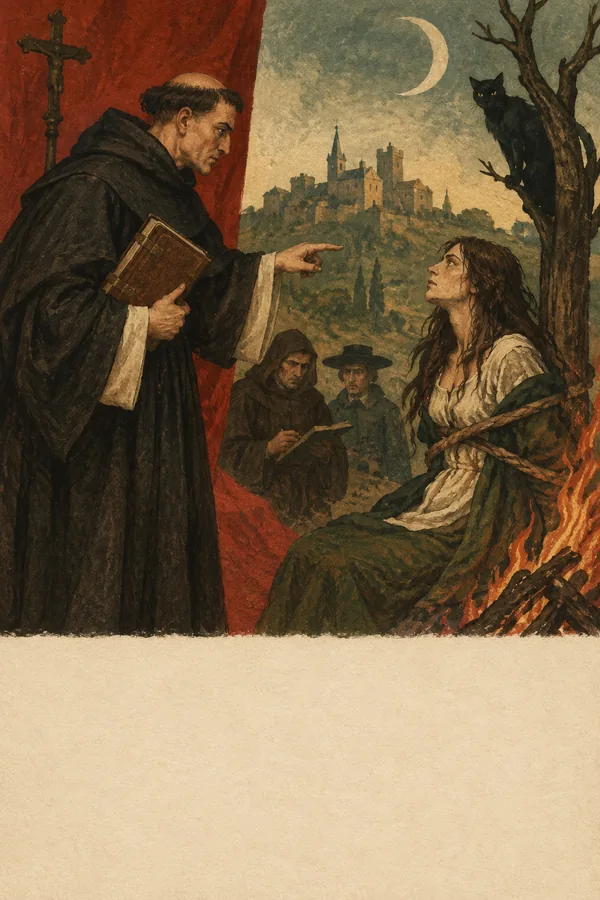
Cover illustration generated by AI.
Text source: gutenberg.org · The work is in the public domain.
Opening of the book
Evolution, Old & New "The want of a practical acquaintance with Natural History leads the author to take an erroneous view of the bearing of his own theories on those of Mr. Darwin.—Review of 'Life and Habit,' by Mr. A. R. Wallace, in 'Nature,' March 27, 1879. "Neither lastly would our observer be driven out of his conclusion, or from his confidence in its truth, by being told that he knows nothing at all about the matter. He knows enough for his argument; he knows the utility of the end; he knows the subserviency and adaptation of the means to the end. These points being known, his ignorance concerning other points, his doubts concerning other points, affect not the certainty of his reasoning. The consciousness of knowing little need not beget a distrust of that which he does know." Paley's 'Natural Theology,' chap. i. Evolution, Old & New Or the Theories of Buffon, Dr. Erasmus Darwin and Lamarck,
as compared with that of Charles Darwin by Samuel Butler New York E. P. Dutton & Company 681 Fifth Avenue Made and printed in Great Britain NOTE The demand for a new edition of "Evolution, Old and New," gives me an opportunity of publishing Butler's latest revision of his work. The second edition of "Evolution, Old and New," which was published in 1882 and re-issued with a new title-page in 1890, was merely a re-issue of the first edition with a new preface, an appendix, and an index. At a later date, though I cannot say precisely when, Butler revised the text of the book in view of a future edition. The corrections that he made are mainly verbal and do not, I think, affect the argument to any considerable extent. Butler, however, attached sufficient importance to them to incur the expense of having the stereos of more than fifty pages
 Readnara