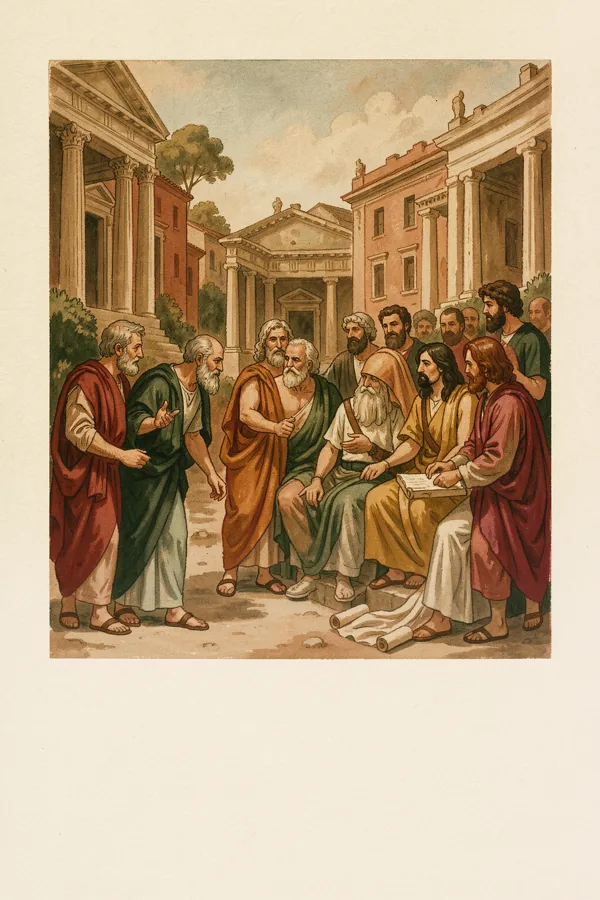
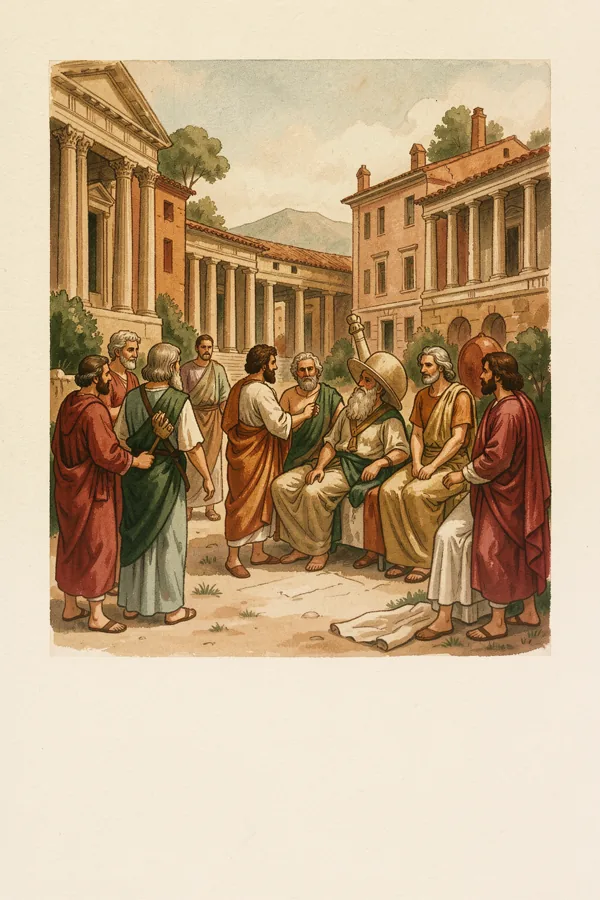
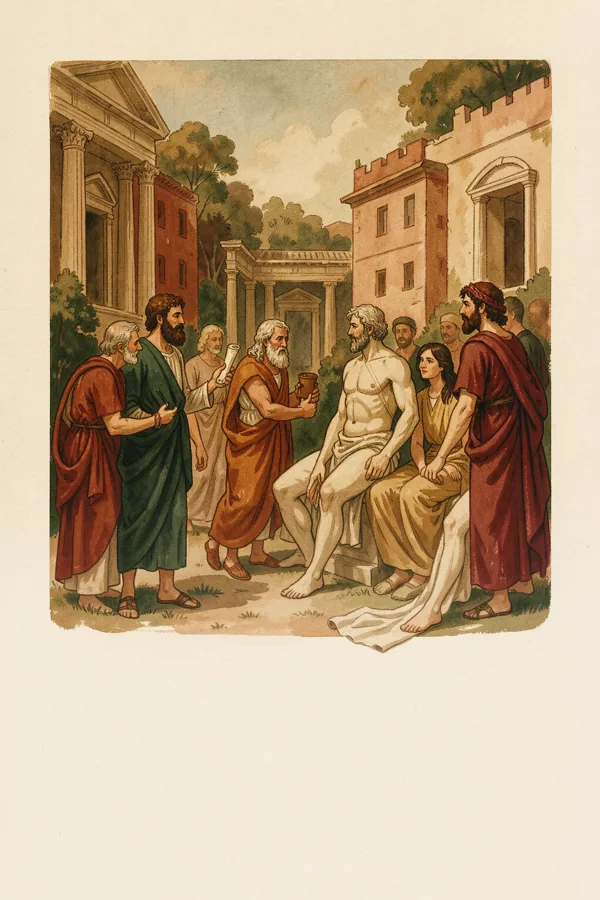
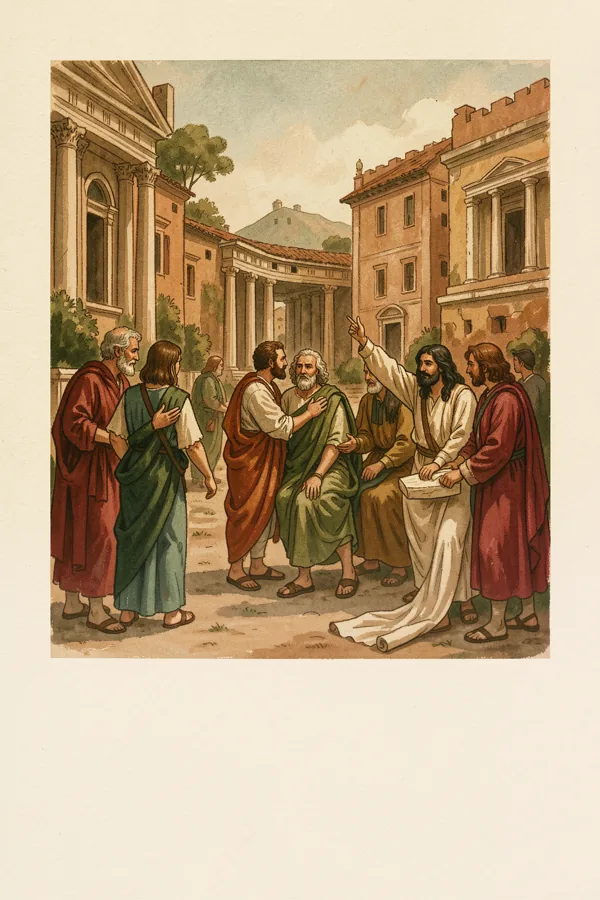
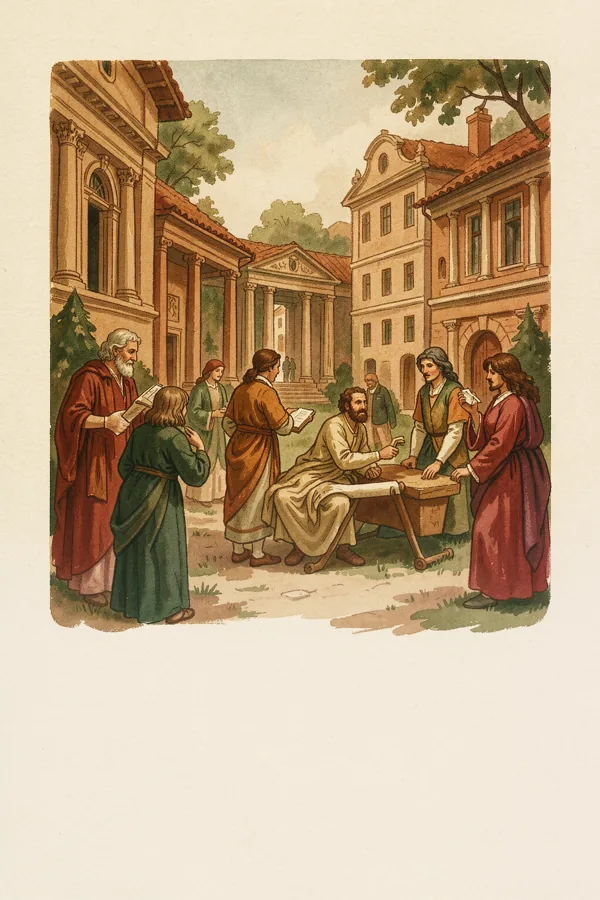
This fourth volume of George Grote's essays examines Plato and other companions of Sokrates, with a detailed abstract of Plato's Republic. It follows Socratic debates on justice, including definitions by Simonides and Polemarchus, and is valuable for readers interested in classical philosophy and careful argument.
For teachers and schools: paste the code into your site or blog.
Cover illustration generated by AI.
Text source: gutenberg.org · The work is in the public domain.
Opening of the book
PLATO, AND THE OTHER COMPANIONS OF SOKRATES. PLATO, and the OTHER COMPANIONS OF SOKRATES. by GEORGE GROTE, author of the ‘history of greece’. A NEW EDITION. IN FOUR VOLUMES.
Vol. IV. LONDON: JOHN MURRAY, ALBEMARLE STREET. 1888. The right of Translation is reserved. CONTENTS. CHAPTER XXXV. PLATONIC REPUBLIC — ABSTRACT. Declared theme of the Republic — Expansion and multiplication of the topics connected with it 1 Personages of the dialogue 2
Views of Kephalus about old age ib. Definition of Justice by Simonides — It consists in rendering to every man what is owing to him ib. Objections to it by Sokrates — There are cases in which it is not right to restore what is owing, or to tell the truth 3 Explanation by Polemarchus — Farther interrogations by Sokrates — Justice renders what is proper and suitable: but how? in what cases, proper? Under what circumstances is Justice useful? 4 The just man, being good for keeping property guarded, must also be good for stealing property — Analogies cited 5 Justice consists in doing good to friends, evil to enemies — But how, if a man mistakes who his friends are, and makes friends of bad men? 6 Justice consists in doing good to your friend, if really a good man: hurt to your enemy, with the like proviso. Sokrates affirms that the just man will do no hurt to any one. Definition of Simonides rejected ib.
 Readnara