The Vicar of Wakefield is an 18th-century novel by Oliver Goldsmith, narrated in the first person. It follows a country clergyman and his family through misfortunes that test their faith and virtue. It is worth listening to for its warm, gentle portrayal of family life and moral endurance.
For teachers and schools: paste the code into your site or blog.
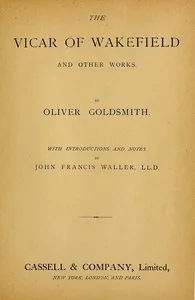
Cover of the original edition (Project Gutenberg, public domain).
Text source: gutenberg.org · The work is in the public domain.
Opening of the book
The Vicar of Wakefield A TALE Supposed to be written by Himself by Oliver Goldsmith Sperate miseri, cavete felices Contents ADVERTISEMENT CHAPTER I. CHAPTER II. CHAPTER III. CHAPTER IV. CHAPTER V. CHAPTER VI.
CHAPTER VII. CHAPTER VIII. CHAPTER IX. CHAPTER X. CHAPTER XI. CHAPTER XII. CHAPTER XIII. CHAPTER XIV. CHAPTER XV. CHAPTER XVI. CHAPTER XVII. CHAPTER XVIII. CHAPTER XIX. CHAPTER XX. CHAPTER XXI. CHAPTER XXII. CHAPTER XXIII. CHAPTER XXIV. CHAPTER XXV. CHAPTER XXVI. CHAPTER XXVII. CHAPTER XXVIII. CHAPTER XXIX. CHAPTER XXX. CHAPTER XXXI. CHAPTER XXXII.
ADVERTISEMENT
There are an hundred faults in this Thing, and an hundred things might be said to prove them beauties. But it is needless. A book may be amusing with numerous errors, or it may be very dull without a single absurdity. The hero of this piece unites in himself the three greatest characters upon earth; he is a priest, an husbandman, and the father of a family. He is drawn as ready to teach, and ready to obey, as simple in affluence, and majestic in adversity. In this age of opulence and refinement whom can such a character please? Such as are fond of high life, will turn with disdain from the simplicity of his country fire-side. Such as mistake ribaldry for humour, will find no wit in his harmless conversation; and such as have been taught to deride religion, will laugh at one whose chief stores of comfort are drawn from futurity.
OLIVER GOLDSMITH.
Detailed contents
Chapter I.
The description of the family of Wakefield; in which a kindred likeness prevails as well of minds as of persons
Chapter II.
Family misfortunes. The loss of fortune only serves to increase the pride of the worthy
 Readnara