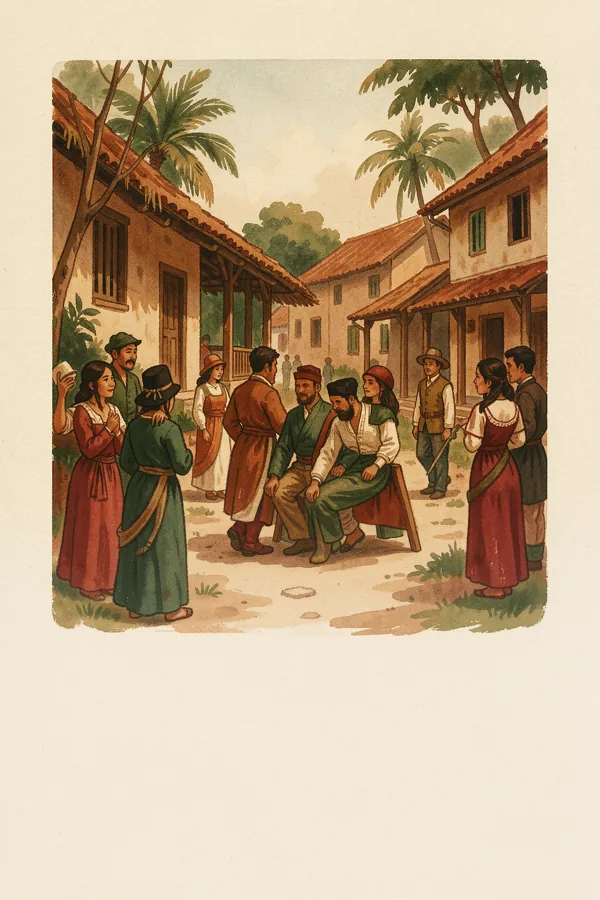
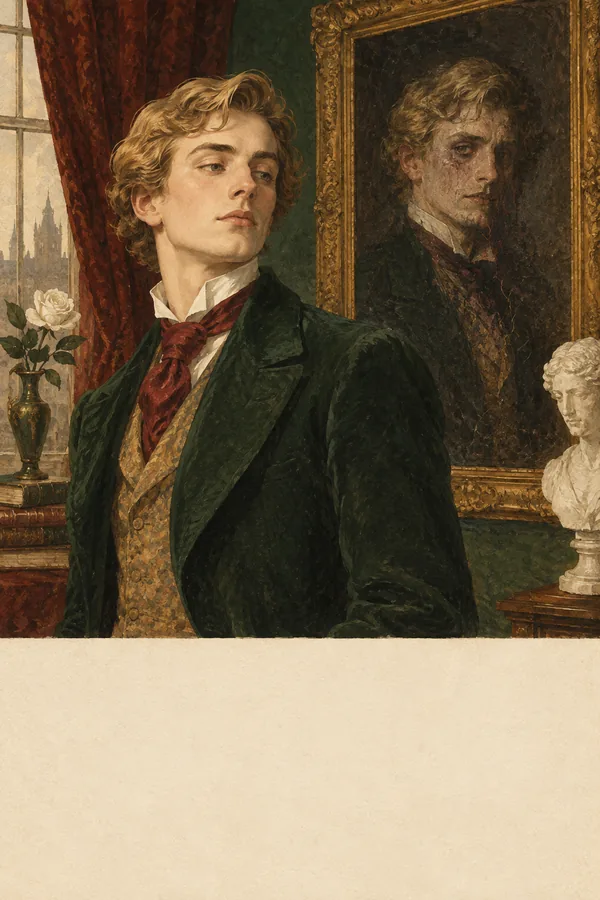
The Social Cancer is Charles Derbyshire’s English translation of José Rizal’s novel Noli Me Tangere, first published in Spanish in 1887. Set in the Philippines under Spanish rule, it follows Crisóstomo Ibarra as he returns home and confronts colonial injustice, corruption, and social hypocrisy. It remains a landmark of Philippine literature.
For teachers and schools: paste the code into your site or blog.
Cover of the original edition (Project Gutenberg, public domain).
Text source: gutenberg.org · The work is in the public domain.
Opening of the book
The Social Cancer A Complete English Version of Noli Me Tangere from the Spanish of José Rizal By Charles Derbyshire Manila Philippine Education Company New York: World Book Company 1912
THE NOVELS OF JOSÉ RIZAL Translated from Spanish into English BY CHARLES DERBYSHIRE • THE SOCIAL CANCER (NOLI ME TANGERE) • THE REIGN OF GREED (EL FILIBUSTERISMO) Copyright, 1912, by Philippine Education Company. Entered at Stationers’ Hall. Registrado en las Islas Filipinas. All rights reserved.
Translator’s Introduction
I
“We travel rapidly in these historical sketches. The reader flies in his express train in a few minutes through a couple of centuries. The centuries pass more slowly to those to whom the years are doled out day by day. Institutions grow and beneficently develop themselves, making their way into the hearts of generations which are shorter-lived than they, attracting love and respect, and winning loyal obedience; and then as gradually forfeiting by their shortcomings the allegiance which had been honorably gained in worthier periods. We see wealth and greatness; we see corruption and vice; and one seems to follow so close upon the other, that we fancy they must have always co-existed.
We look more steadily, and we perceive long
periods of time, in which there is first a growth and then a decay, like what we perceive in a tree of the forest.”
FROUDE, Annals of an English Abbey.
Monasticism’s record in the Philippines presents no new general fact to the eye of history. The attempt to eliminate the eternal feminine from her natural and normal sphere in the scheme of things there met with the same certain and signal disaster that awaits every perversion of human activity. Beginning with a band of zealous, earnest men, sincere in their convictions, to whom the cause was all and their personalities nothing, it there, as elsewhere, passed through its usual cycle of usefulness, stagnation, corruption, and
 Readnara