This third volume of Beveridge's four-part biography covers John Marshall's life and work from 1800 to 1815. It sets his major Constitutional opinions, including Marbury v. Madison, against the political conflicts and nation-building of the early United States. Listeners interested in American legal and political history will find a detailed portrait of a justice shaping the young republic.
For teachers and schools: paste the code into your site or blog.
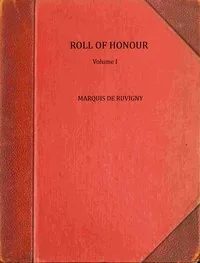
Cover of the original edition (Project Gutenberg, public domain).
Text source: gutenberg.org · The work is in the public domain.
Opening of the book
THE LIFE OF JOHN MARSHALL Standard Library Edition IN FOUR VOLUMES VOLUME III JOHN MARSHALL JOHN MARSHALL From the portrait by Chester Harding THE LIFE OF JOHN MARSHALL BY ALBERT J. BEVERIDGE Volume III CONFLICT AND CONSTRUCTION 1800-1815
BOSTON AND NEW YORK
HOUGHTON MIFFLIN COMPANY
The Riverside Press Cambridge
COPYRIGHT, 1919, BY ALBERT J. BEVERIDGE
ALL RIGHTS RESERVED
PREFACE
Marshall's great Constitutional opinions grew out of, or were addressed to, serious public conditions, national in extent. In these volumes the effort is made to relate the circumstances that required him to give to the country those marvelous state papers: for Marshall's opinions were nothing less than state papers and of the first rank. In order to understand the full meaning of his deliverances and to estimate the just value of his labors, it is necessary to know the historical sources of his foremost expositions of the Constitution, and the historical purposes they were intended to accomplish. Without such knowledge, Marshall's finest pronouncements become mere legal utterances, important, to be sure, but colorless and unattractive.
It is worthy of repetition, even in a preface, that the history of the times is a part of his greatest opinions; and that, in the treatment of them a résumé of the events that produced them must be given. For example, the decision of Marbury vs. Madison, at the time and in the manner it was rendered, was compelled by the political situation then existing, unless the principle of judicial supremacy over legislation was to be abandoned. The Judiciary Debate of 1802 in Congress—one of the most brilliant as well as most important legislative engagements in parliamentary history—can no more be overlooked by the student of American Constitutional development, than the opinion of Marshall
 Readnara