This volume gathers letters exchanged by poets Robert Browning and Elizabeth Barrett Barrett in 1845–1846. The correspondence follows their literary friendship and courtship, giving a vivid view of Victorian literary life. It is rewarding for listeners interested in poetry, biography, and the craft of letter writing.
For teachers and schools: paste the code into your site or blog.
Cover illustration generated by AI.
Text source: gutenberg.org · The work is in the public domain.
Opening of the book
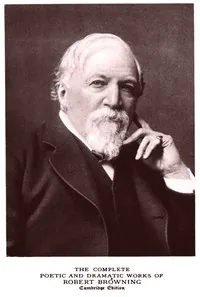
THE LETTERS OF ROBERT BROWNING AND ELIZABETH BARRETT BARRETT 1845-1846 WITH PORTRAITS AND FACSIMILES IN TWO VOLUMES VOL. I. FOURTH IMPRESSION LONDON SMITH, ELDER, & CO., 15 WATERLOO PLACE 1900 Robert Browning Robert Browning from an oil painting by Gordigiani NOTE In considering the question of publishing these
letters, which are all that ever passed between my father and mother, for after their marriage they were never separated, it seemed to me that my only alternatives were to allow them to be published or to destroy them. I might, indeed, have left the matter to the decision of others after my death, but that would be evading a responsibility which I feel that I ought to accept. Ever since my mother's death these letters were kept by my father in a certain inlaid box, into which they exactly fitted, and where they have always rested, letter beside letter, each in its consecutive order and numbered on the envelope by his own hand. My father destroyed all the rest of his correspondence, and not long before his death he said, referring to these letters: 'There they are, do with them as you please when I am dead and gone!' A few of the letters are of little or no interest, but their omission would have saved only a few pages, and I think it well that the correspondence should be given in its entirety. I wish to express my gratitude to my father's friend and mine, Mrs. Miller Morison, for her unfailing sympathy and assistance in deciphering some words which had become scarcely legible owing to faded ink. R.B.B. 1898. ADVERTISEMENT The correspondence contained in these volumes is printed exactly as it appears in the original letters, without alteration, except in respect of obvious slips of the pen. Even the punctuation, with its characteristic dots and dashes, has for the most part been preserved. The notes in square brackets [] have been added mainly in order to translate the Greek phrases, and to give the
 Readnara