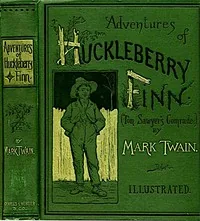
Opening of the book
Introduction
Mark Twain had been a celebrity for a good many years before he could be persuaded to regard himself as anything more than an accident, a news-writer to whom distinction had come as a matter of good fortune rather than as a tribute to genius. Sooner or later his
“vein” would be worked out, when he would of necessity embark in other pursuits.
He had already owned a newspaper, and experimented more or less casually —and unfortunately —with a variety of other enterprises, when in 1884 he capitalized a publishing concern, primarily to produce his own works, but not without a view to the establishment of something more dependable than authorship. It probably never occurred to him during those years that he had achieved anything like a permanent place in literary history; if the idea of an autobiography had intruded itself now and then, it had not seriously troubled him.1
But a year later, when the publication by his firm of the Memoirs of Gen. U. S. Grant brought him into daily association with the dying conqueror, the thought came that the story of this episode might be worthy of preservation. It was not, for the present, at least, to be an autobiography, but no more than a few chapters, built around a great historic figure. General Grant’s own difficulties in setting down his memories suggested prompt action. Mark
Twain’s former lecture agent, James Redpath, was visiting him at this time, and with a knowledge of shorthand became his amanuensis. The work they did together was considerable, covering in detail the story of the Grant publishing venture. Clemens may have planned other chapters of a personal sort, but, unaccustomed to dictation, he found the work tedious, with a result, as it seemed to him, unsatisfactory.
A number of important things happened to Mark Twain during the next dozen years, among them his business failure, which left
Keep listening free
 Readnara