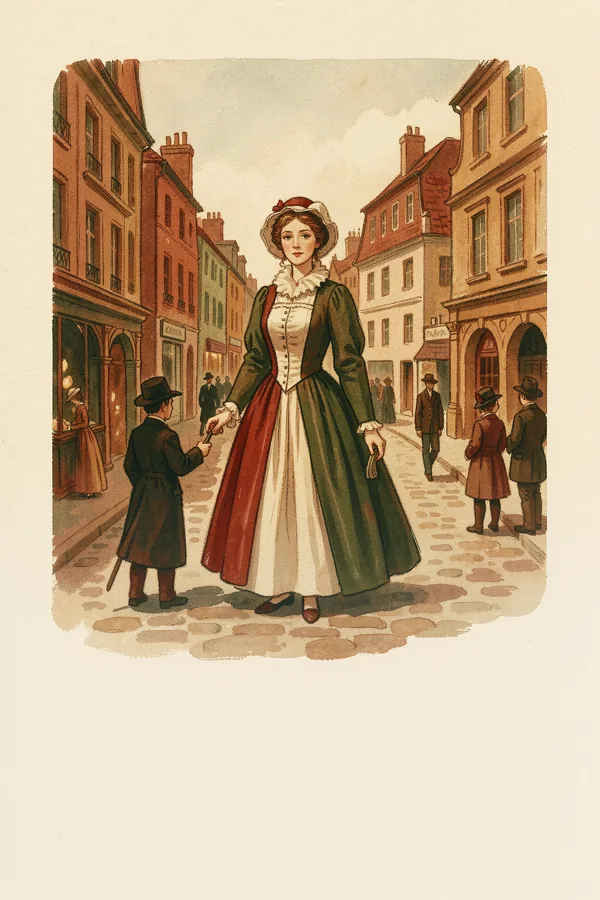
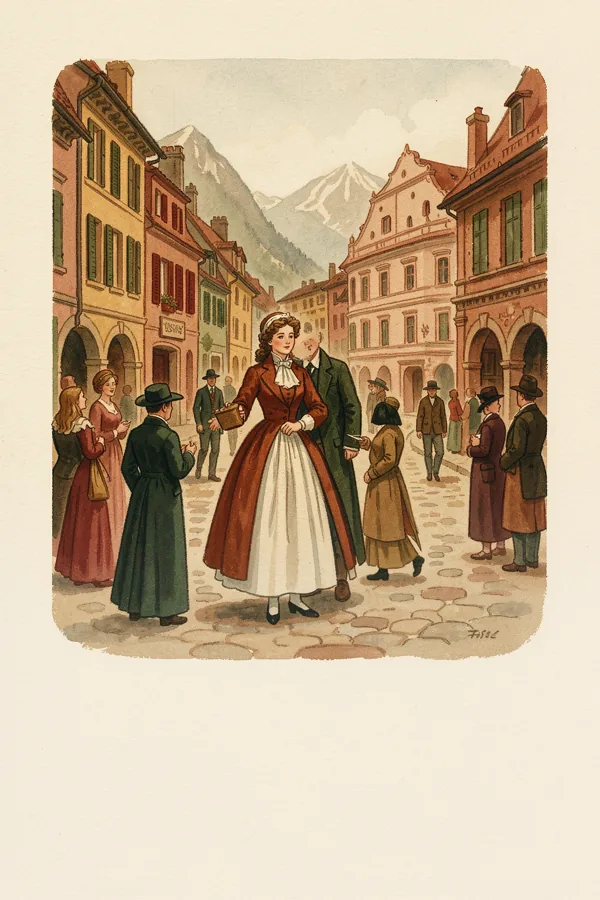
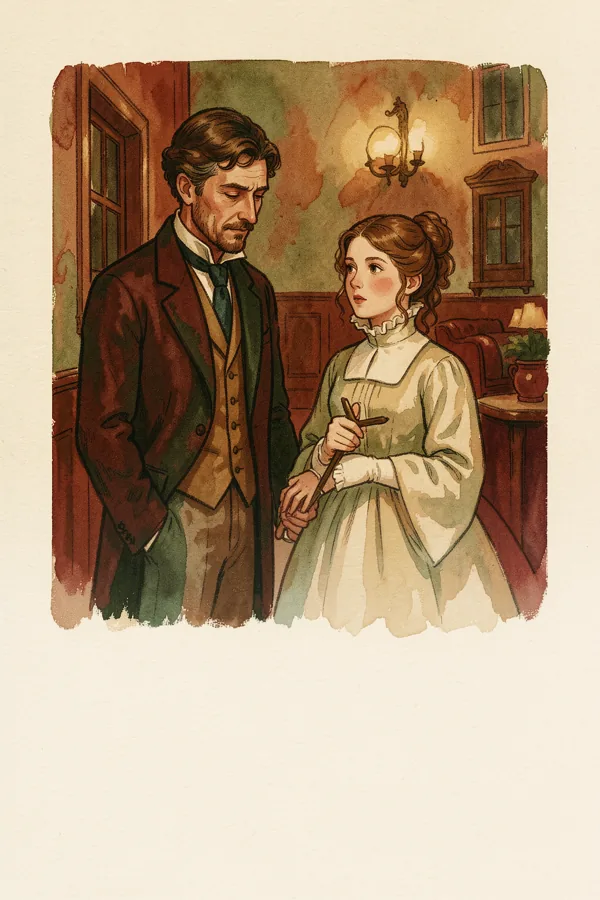
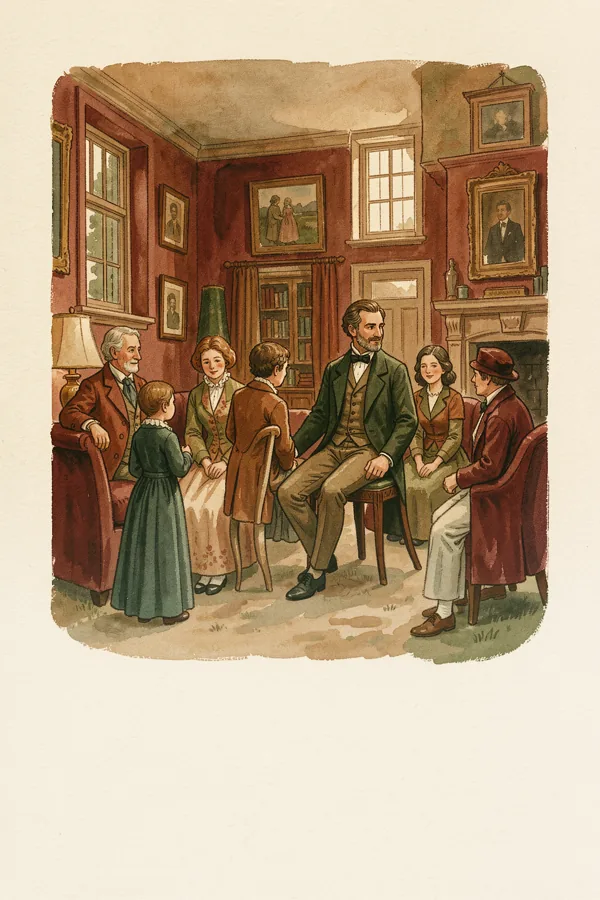
The Ambassadors is a novel by Henry James. It follows Lambert Strether, a middle-aged American sent to Paris to bring back his fiancée's son, Chad Newsome, but who finds himself changed by European life and new moral perspectives. It is worth listening to for its subtle psychological prose and careful exploration of freedom, duty, and self-knowledge.
For teachers and schools: paste the code into your site or blog.
Cover of the original edition (Project Gutenberg, public domain).
Text source: gutenberg.org · The work is in the public domain.
Opening of the book
The Ambassadors by Henry James New York Edition (1909) Contents Volume I Preface Book First Book Second Book Third Book Fourth Book Fifth Book Sixth Volume II Book Seventh
Book Eighth Book Ninth Book Tenth Book Book Eleventh Book Twelfth
Volume I
Preface
Nothing is more easy than to state the subject of “The
Ambassadors,” which first appeared in twelve numbers of The North
American Review (1903) and was published as a whole the same year.
The situation involved is gathered up betimes, that is in the second chapter of Book Fifth, for the reader’s benefit, into as few words as possible—planted or “sunk,” stiffly and saliently, in the centre of the current, almost perhaps to the obstruction of traffic. Never can a composition of this sort have sprung straighter from a dropped grain of suggestion, and never can that grain, developed, overgrown and smothered, have yet lurked more in the mass as an independent particle. The whole case, in fine, is in Lambert Strether’s irrepressible outbreak to little Bilham on the Sunday afternoon in Gloriani’s garden, the candour with which he yields, for his young friend’s enlightenment, to the charming admonition of that crisis. The idea of the tale resides indeed in the very fact that an hour of such unprecedented ease should have been felt by him as a crisis, and he is at pains to express it for us as neatly as we could desire. The remarks to which he thus gives utterance contain the essence of “The
Ambassadors,” his fingers close, before he has done, round the stem of the full-blown flower; which, after that fashion, he continues
 Readnara