Stories from Tagore is a collection of short stories by Rabindranath Tagore, set in India and centred on everyday life, human relationships and social customs. Simply told and warm, they are worth listening to for their humane, lyrical storytelling.
For teachers and schools: paste the code into your site or blog.
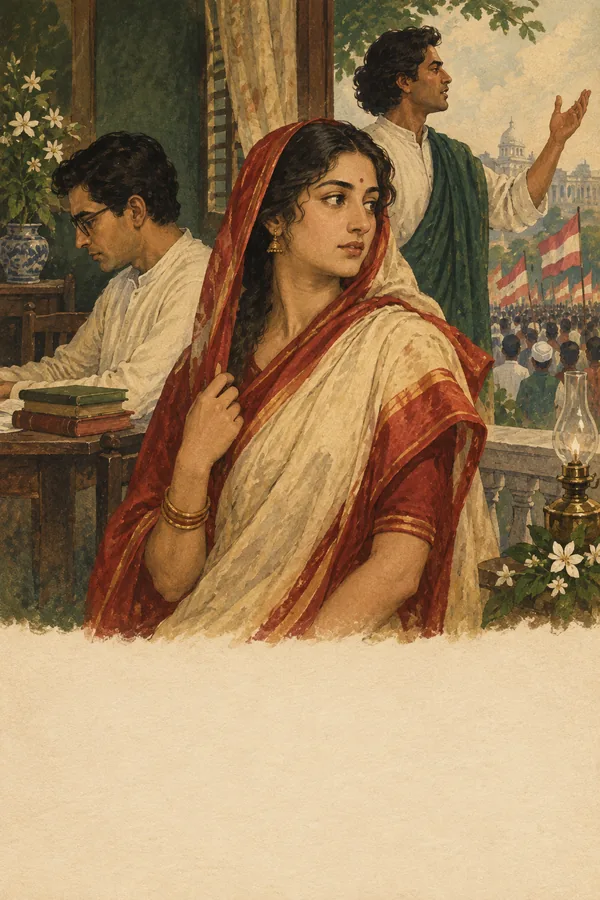
Cover of the original edition (Project Gutenberg, public domain).
Text source: gutenberg.org · The work is in the public domain.
Opening of the book
Transcriber's Notes: Variations in spelling and hyphenation have been retained as in the original. Words listed in the 'Words to be Studied' sections are linked in the text like this. Click on the word to see the explanation. A few typographical errors have been corrected. A complete list of changes follows the text. STORIES FROM TAGORE Publisher's Logo. THE MACMILLAN COMPANY NEW YORK · BOSTON · CHICAGO · DALLAS ATLANTA · SAN FRANCISCO MACMILLAN & CO., Limited LONDON · BOMBAY · CALCUTTA MELBOURNE THE MACMILLAN CO. OF CANADA, Ltd. TORONTO Stories from Tagore
New York The Macmillan Company 1918 All rights reserved Copyright 1916 and 1918 By THE MACMILLAN COMPANY Set up and electrotyped. Published, October, 1918 PREFACE Every experienced teacher must have noticed the difficulty of instructing Indian children out of books that are specially intended for use in English schools. It is not merely that the subjects are unfamiliar, but almost every phrase has English associations that are strange to Indian ears. The environment in which they are written is unknown to the Indian school boy and his mind becomes overburdened with its details which he fails to understand. He cannot give his whole attention to the language and thus master it quickly. The present Indian story-book avoids some at least of these impediments. The surroundings described in it are those of the students' everyday life; the sentiments and characters are familiar. The stories are simply told, and the notes at the end will be sufficient to explain obscure passages. It should be possible for the Indian student to follow the pages of the book easily and intelligently. Those students who have read the stories in the original will have the further advantage of knowing beforehand the whole trend of the narrative and thus they will be able to concentrate their thoughts on the English language itself.
 Readnara