Opening of the book
Imitation of Spenser
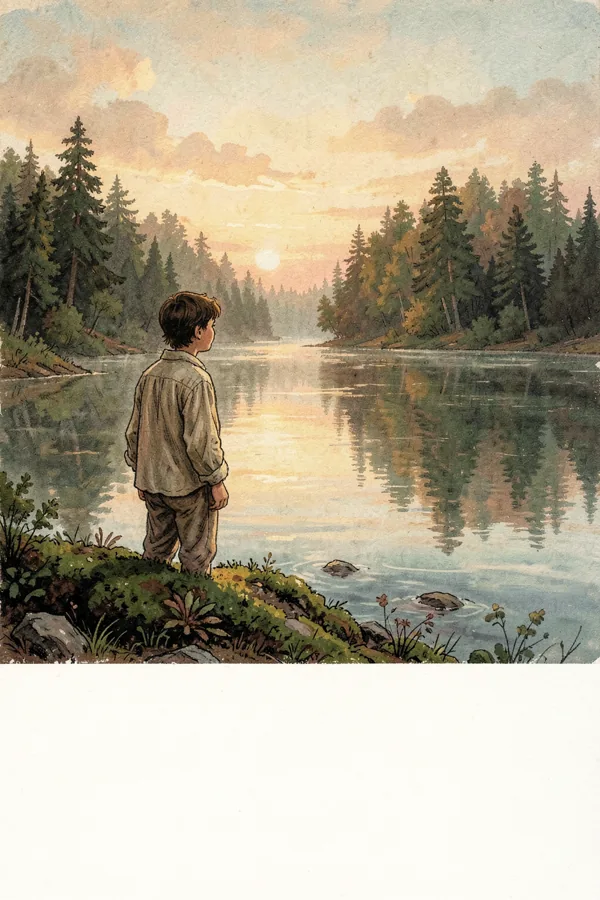
Now Morning from her orient chamber came,
And her first footsteps touch’d a verdant hill;
Crowning its lawny crest with amber flame,
Silv’ring the untainted gushes of its rill;
Which, pure from mossy beds, did down distil,
And after parting beds of simple flowers,
By many streams a little lake did fill,
Which round its marge reflected woven bowers,
And, in its middle space, a sky that never lowers.
There the kingfisher saw his plumage bright,
Vying with fish of brilliant dye below;
Whose silken fins, and golden scales’ light
Cast upward, through the waves, a ruby glow:
There saw the swan his neck of arched snow,
And oar’d himself along with majesty;
Sparkled his jetty eyes; his feet did show
Beneath the waves like Afric’s ebony,
And on his back a fay reclined voluptuously.
Ah! could I tell the wonders of an isle
That in that fairest lake had placed been,
I could e’en Dido of her grief beguile;
Or rob from aged Lear his bitter teen:
For sure so fair a place was never seen,
Of all that ever charm’d romantic eye:
It seem’d an emerald in the silver sheen
Of the bright waters; or as when on high,
Through clouds of fleecy white, laughs the cœrulean sky.
And all around it dipp’d luxuriously
Slopings of verdure through the glossy tide,
Which, as it were in gentle amity,
Rippled delighted up the flowery side;
As if to glean the ruddy tears, it tried,
Which fell profusely from the rose-tree stem!
Haply it was the workings of its pride,
In strife to throw upon the shore a gem
Outvying all the buds in Flora’s diadem.
On Death
Can death be sleep, when life is but a dream,
And scenes of bliss pass as a phantom by?
The transient pleasures as a vision seem,
And yet we think the greatest pain’s to die.
How strange it is that man on earth should roam,
And lead a life of woe, but not forsake
His rugged path; nor dare he view alone
His future doom, which is but to awake.
Keep listening free
 Readnara