A history of Florence and Italian affairs by Niccolò Machiavelli, spanning from early times to the death of Lorenzo the Magnificent. It traces political factions, wars, and the shifting fortunes of the peninsula, offering a Renaissance statesman's view of power and civic life. Listen for its analytical narrative and insight into Italian politics.
For teachers and schools: paste the code into your site or blog.
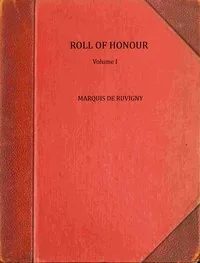
Cover illustration generated by AI.
Text source: gutenberg.org · The work is in the public domain.
Opening of the book
HISTORY OF FLORENCE AND OF THE AFFAIRS OF ITALY FROM THE EARLIEST TIMES TO THE DEATH OF LORENZO THE MAGNIFICENT By Niccolo Machiavelli
With an Introduction by HUGO ALBERT RENNERT, Ph.D. Professor of Romanic Languages and Literature, University of Pennsylvania. PREPARER'S NOTE This text was typed up from a Universal Classics Library edition, published in 1901 by W. Walter Dunne, New York and London. The translator was not named. The book contains a "photogravure" of Niccolo Machiavelli from an engraving. INTRODUCTION Niccolo Machiavelli, the first great Italian historian, and one of the most eminent political writers of any age or country, was born at Florence, May 3, 1469. He was of an old though not wealthy Tuscan family, his father, who was a jurist, dying when Niccolo was sixteen years old. We know nothing of Machiavelli's youth and little about his studies. He does not seem to have received the usual humanistic education of his time, as he knew no Greek.[*] The first notice of Machiavelli is in 1498 when we find him holding the office of Secretary in the second Chancery of the Signoria, which office he retained till the downfall of the Florentine Republic in 1512. His unusual ability was soon recognized, and in 1500 he was sent on a mission to Louis XII. of France, and afterward on an embassy to Cæsar Borgia, the lord of Romagna, at Urbino. Machiavelli's report and description of this and subsequent embassies to this prince, shows his undisguised admiration for the courage and cunning of Cæsar, who was a master in the application of the principles afterwards exposed in such a skillful and uncompromising manner by
 Readnara