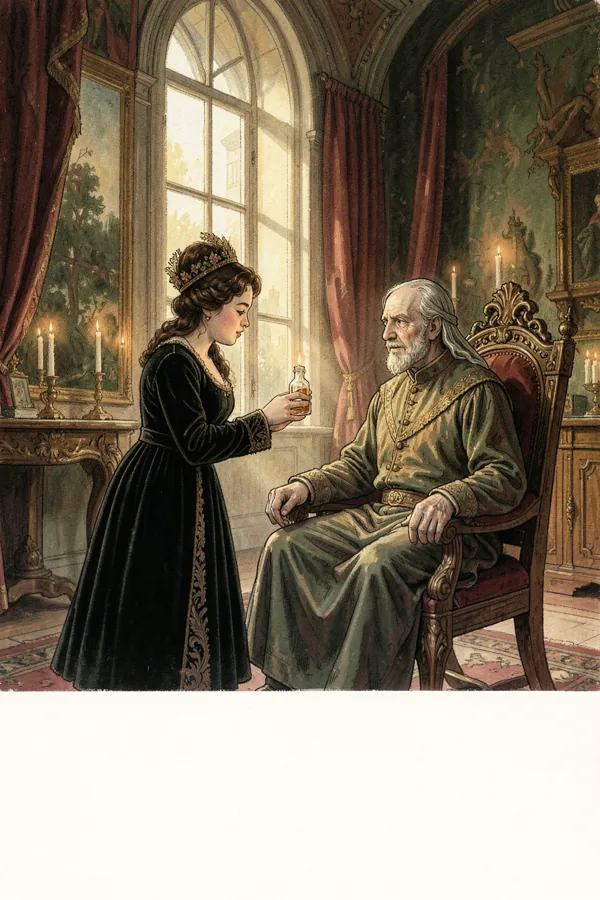
Opening of the book
Dramatis Personae
King of France
Duke of Florence
Bertram, Count of Rousillon
Lafeu, an old lord
Parolles, a follower of Bertram
Steward, servant to the Countess of Rousillon
Clown, servant to the Countess of Rousillon
A Page
Countess of Rousillon, mother to Bertram
Helena, a gentlewoman protected by the Countess
An old widow of Florence
Diana, daughter to the widow
Violenta, neighbour and friend to the widow
Mariana, neighbour and friend to the widow
Lords, officers, soldiers, etc., French and Florentine
Scene: Rousillon; Paris; Florence; Marseilles.
Act I
Scene I
Rousillon. The CLjǼƿǵ’Ǫ palace.
(Enter Bŧǡǵǡĵƽ, the CLjǼƿǵŧǪǪ Ljż RLjǼǪƗƯƯLjƿ, HŧƯŧƿĵ, and
LĵżŧǼ, all in black.)
ǼƿǵŧǪǪ
In delivering my son from me, I bury a second husband. ǡǵǡĵƽ
And I in going, madam, weep o’er my father’s death anew: but I must attend his majesty’s command, to whom I am now in ward, evermore in subjection.
LĵżŧǼ
You shall find of the king a husband, madam; you, sir, a father: he that so generally is at all times good must of necessity hold his virtue to you; whose worthiness would stir it up where it wanted rather than lack it where there is such abundance.
ǼƿǵŧǪǪ
What hope is there of his majesty’s amendment?
LĵżŧǼ
He hath abandoned his physicians, madam; under whose practices he hath persecuted time with hope, and finds no other advantage in the process but only the losing of hope by time.
ǼƿǵŧǪǪ
This young gentlewoman had a father —O, that “had”! how sad a passage ’tis! —whose skill was almost as great as his honesty; had it stretched so far, would have made nature immortal, and death should have play for lack of work. Would, for the king’s sake, he were living! I think it would be the death of the king’s disease.
Keep listening free
 Readnara